

Frequently Asked Questions
Comprehensive Appliance Repair FAQ for Arlington Homeowners | Appliance Repair Pros
When a household appliance breaks down, it immediately disrupts the rhythm of your daily life. A refrigerator that stops cooling or a washing machine that refuses to spin creates stress and uncertainty. At Appliance Repair Pros, we understand that you have questions. You want to know what is wrong, why it happened, and how it can be fixed. We believe that an informed customer is a satisfied customer. To that end, we have compiled this extensive Frequently Asked Questions resource. This guide covers every aspect of our service, from general inquiries about our operations in Arlington, Massachusetts, to specific technical questions regarding the major brands and appliances we service. Whether you are dealing with a leaking Bosch dishwasher or a warm Samsung refrigerator, you will find helpful, expert insights below.
General Service Questions
Do you service all neighborhoods in Arlington?
Yes, we are a locally focused business dedicated to the entire Arlington community. We provide service to every neighborhood within the 02474 and 02476 zip codes. From the historic homes in Arlington Heights to the condos along Massachusetts Avenue and the properties near Spy Pond, we cover it all. We are familiar with the local traffic patterns, which allows us to provide prompt and reliable arrival windows.
Is it worth repairing an older appliance?
This is one of the most common questions we receive. The answer depends on several factors, including the age of the unit, its overall physical condition, and the nature of the specific failure. Older appliances, particularly those made before 2010, were often built with heavy-duty mechanical components that have a long service life. In many cases, replacing a single failed part, like a lid switch or a heating element, can extend the life of the machine by many years. Newer machines, while energy-efficient, rely heavily on complex electronics that can be sensitive. We provide an honest assessment of your specific unit. If the repair is viable and will result in a reliable machine, we will recommend it. We want you to make the decision that is best for your long-term household needs.
What is the difference between a mechanical failure and an electronic failure?
Home appliances operate using a mix of mechanical parts and electronic controls. A mechanical failure involves a physical component breaking or wearing out. Examples include a snapped dryer belt, a stripped washer gear, or a seized motor bearing. These repairs are straightforward and involve swapping the broken part. An electronic failure involves the “brain” of the machine. This could be a main control board that has shorted out, a sensor that is sending incorrect data, or a user interface that is unresponsive. Electronic repairs often require specialized diagnostic tools to pinpoint which circuit board or sensor is at fault. Our technicians are trained to handle both types of failures proficiently.
Refrigerator and Freezer FAQ
Why is my refrigerator running constantly?
If your refrigerator sounds like it never shuts off, it is working overtime to try to reach the set temperature. The most frequent cause is dirty condenser coils. These coils are located at the bottom or back of the unit and are responsible for releasing heat. If they are coated in dust and pet hair, they cannot release heat efficiently, forcing the compressor to run non-stop. Another potential cause is a failing door seal. If the gasket is torn or brittle, warm air from your kitchen constantly leaks inside, making the unit work harder. In some cases, it can indicate a problem with the sealed system itself, such as a low refrigerant level.
Why is my Samsung refrigerator ice maker freezing up?
This is a specific issue known to affect Samsung French door models. The ice maker compartment is located in the refrigerator section but is cooled by the freezer. If the seal around the “ice room” is not airtight, warm moisture from the fridge enters the cold compartment. This moisture turns into frost, which eventually jams the ice maker fan and the auger. We perform a comprehensive service that involves sealing the air leaks, replacing the auger drain tube with an updated version, and resetting the control logic to prevent future frost accumulation.
Why is my LG refrigerator not cooling?
LG refrigerators often use a Linear Compressor, which is a high-efficiency component that operates differently than traditional compressors. If the fans are running but the air is warm, the compressor may have failed internally. Another possibility is a failure of the start relay on the motherboard. We can test the amperage draw of the compressor and the output signals from the inverter board to determine if the issue lies with the compressor itself or the electronics controlling it.
Why is there water pooling at the bottom of my fridge?
Water under the crisper drawers is almost always caused by a clogged defrost drain. All refrigerators go through a defrost cycle where ice on the coils melts. This water is supposed to drip into a trough and flow down a tube to a pan under the unit. If the drain hole freezes over or gets clogged with food debris, the water overflows the trough and runs down the back wall into the fridge. We can clear the blockage and install a heat probe to keep the drain open.
My GE refrigerator is making a loud humming noise.
Refrigerators make various sounds, but a loud hum is usually specific. If it comes from the back, it is likely the compressor or the condenser fan. If the fan blade hits debris, it creates a loud noise. If the sound comes from inside the freezer, it is likely the evaporator fan motor failing. If the fan bearings wear out, they create a high-pitched screech or hum. We can identify the source of the noise and replace the worn motor to restore quiet operation.
Washing Machine FAQ
Why does my washing machine smell like mildew?
This issue is most prevalent in front-loading washers. The door boot seal is designed to be watertight, but this also traps moisture and detergent residue inside. Over time, this creates a breeding ground for mold and bacteria. To prevent this, we recommend leaving the door slightly ajar between uses to allow air circulation. You should also run a “Clean Washer” cycle with a specialized tablet or hot water and bleach monthly. If the smell persists, the drain pump filter may be clogged with organic matter.
Why is my Whirlpool washer not spinning?
A washer that agitates but will not spin leaves you with soaking wet clothes. On Whirlpool vertical modular washers, this is often caused by a failed shift actuator. This component shifts the transmission from agitate mode to spin mode. If the optical sensor on the actuator fails, the machine will not spin. On older direct-drive models, it is often a broken motor coupler or a worn clutch assembly. We can inspect the drive system to identify the failed component.
What does the “UE” or “dc” code mean on my Samsung washer?
These codes indicate an Unbalanced Load error. The washer detects that the tub is wobbling excessively during the spin cycle. This can happen if you wash a single heavy item, like a rug. However, if it happens with normal loads, it usually points to a suspension failure. The suspension rods that support the tub can lose their spring tension over time. We can replace the suspension rods to stabilize the tub and allow the machine to reach high spin speeds.
Why is my Bosch washer not draining?
Bosch compact washers have a drain pump located behind a small access door on the front of the unit. The most common cause of a drain failure is a clogged coin trap. Small items like coins, buttons, or lint can get trapped in the filter, preventing the pump from moving water. If the filter is clear, the drain pump motor itself may have failed. We can safely drain the machine and clear the obstruction.
Why is my washing machine shaking violently?
Excessive vibration is usually a sign that the machine is not level or that the internal suspension components are worn. In front-loading washers, the shock absorbers can wear out, causing the drum to bang against the cabinet. In top-loaders, the dampening straps or snubber ring may be worn. We can level the machine using the adjustable legs and inspect the internal suspension to ensure smooth operation.
Dryer FAQ
Why is my dryer running but not heating?
This is the most common dryer issue we encounter. In electric dryers, the heating element is a coil of wire that can break over time, severing the electrical connection. In gas dryers, the issue is often a weak igniter that fails to light the gas burner. It can also be caused by a blown thermal fuse. The thermal fuse is a safety device that trips if the dryer overheats. If it blows, the dryer may still run but will not produce heat. We can test the heating circuit to find the break.
Why does my LG dryer take hours to dry clothes?
If your dryer runs for multiple cycles to dry a single load, it is almost always an airflow issue. The moisture pulled from the clothes must be exhausted outside. If your home’s vent duct is clogged with lint, the moist air is trapped inside the drum. LG dryers have a “FlowSense” indicator that warns of this. It can also be caused by the moisture sensor bars inside the drum being coated with dryer sheet residue. We can determine if the issue is with the machine or the ventilation system.
Why is my dryer making a squeaking noise?
A rhythmic squeak usually indicates wear on the moving parts that support the drum. The drum support rollers, idler pulley, and rear bearing are all wear items. As the lubrication dries out, metal rubs against metal or nylon, creating a high-pitched noise. Ignoring this can lead to the belt snapping or the motor burning out. We can disassemble the dryer and replace the maintenance kit to restore quiet operation.
Why won’t my dryer start?
If the dryer is completely unresponsive, first check the door switch. If the switch does not click or fails to close the circuit, the dryer thinks the door is open and will not start. It can also be a blown thermal fuse (on some models, this cuts power to the motor entirely) or a broken start switch. We use multimeters to trace the voltage and find where the power is being interrupted.
Dishwasher FAQ
Why is my dishwasher flashing a “Clean” light?
A flashing light on the control panel is a diagnostic code. On many brands, including Whirlpool and KitchenAid, a “Clean” light flashing in a pattern (such as seven flashes) indicates a heating fault. The control board detected that the water temperature did not rise during the cycle. This could be due to a burnt-out heating element, a faulty thermostat, or the water entering the machine being too cold. We can reset the code and test the heating components.
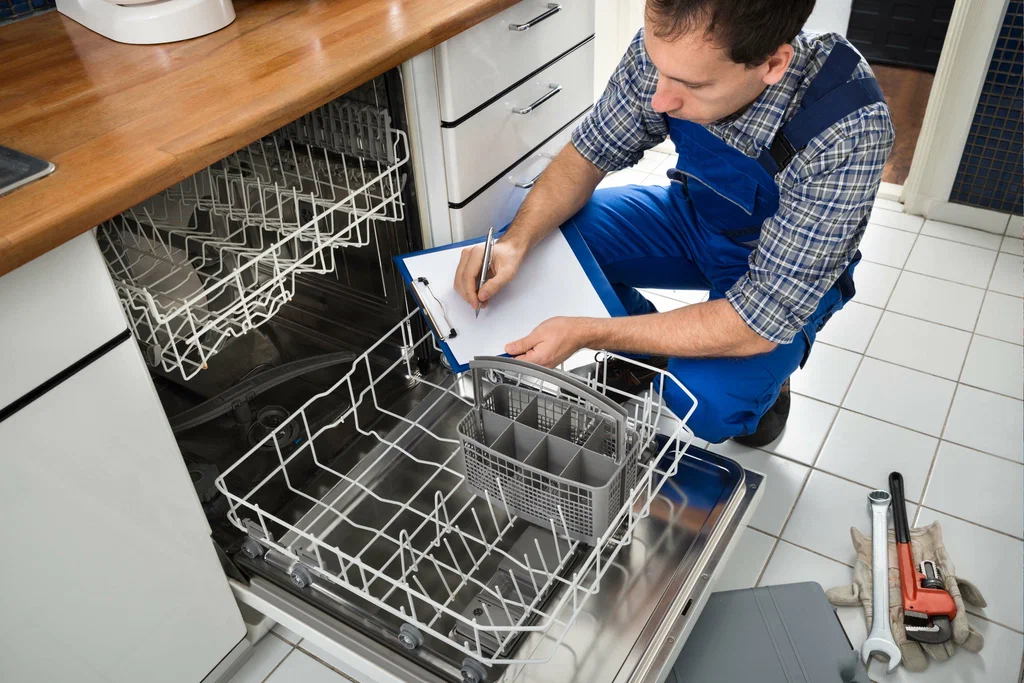
Why is my Bosch dishwasher showing error E15?
Error E15 is specific to Bosch dishwashers and indicates a leak. The machine has a safety basin at the very bottom. If water drips into this basin, a Styrofoam float rises and activates a switch. The machine immediately turns on the drain pump to prevent flooding. You will hear the pump running even with the door open. We must pull the unit out to find the source of the internal leak, which is often the sump seal or the water inlet valve.
Why are my dishes still wet?
Drying performance depends on the technology your dishwasher uses. American brands like GE and Maytag typically use a heating element to bake the dishes dry. If the element fails, dishes stay wet. European brands like Bosch and Miele use condensation drying, which relies on the heat of the water stored in the dishes. For these units, rinse aid is mandatory. Without rinse aid, water does not sheet off the dishes, and they will not dry. We can verify if the fan or heating system is working correctly.
Why is my KitchenAid dishwasher not cleaning the top rack?
If the bottom rack is clean but the top rack is dirty, the issue is water delivery. The water must travel up a tube at the back of the tub to reach the upper spray arm. If the docking station where the rack connects is loose, or if the tube is clogged, water pressure is lost. It can also be a failure of the diverter motor, which directs water between the racks. We can inspect the water path to ensure full pressure reaches the top.
Why is my dishwasher not draining?
Standing water in the dishwasher is a sanitation issue. The most common cause is a clogged filter at the bottom of the tub. It can also be a blockage in the drain hose where it connects to the sink plumbing or garbage disposal. If the path is clear, the drain pump motor may have failed. On Frigidaire models, this often triggers an “i20” error code. We can clear the blockage and test the pump.
Oven and Stove FAQ
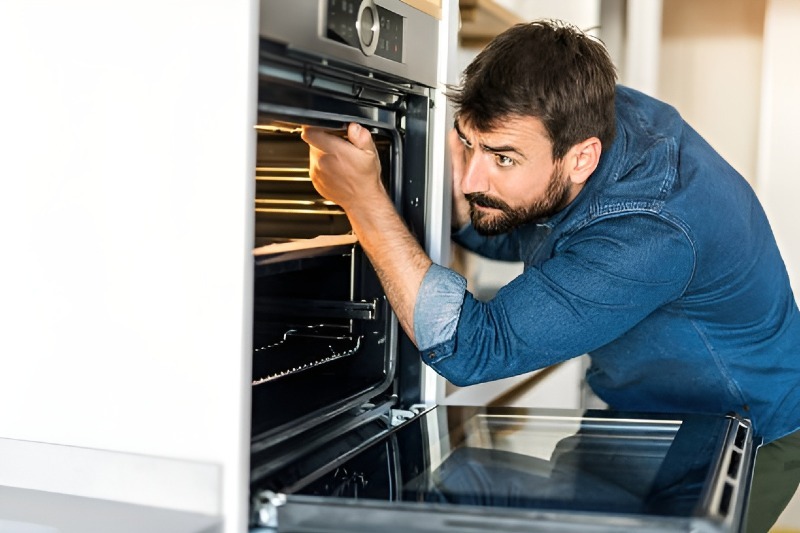
Why is my gas oven not heating?
The most common failure in a gas oven is the igniter. The igniter is a glow bar that heats up to ignite the gas. It acts as an electrical valve; it must draw a specific amount of current to open the gas safety valve. As igniters age, they get weak. They may still glow orange, but they are not hot enough to open the valve. We can measure the amperage draw and replace the igniter to restore heat.
Why is my electric oven not heating evenly?
Uneven baking is often caused by a failure of one of the heating elements. An oven typically alternates between the bake element (bottom) and the broil element (top) to maintain temperature. If one burns out, the oven relies solely on the other, causing uneven heat. In convection ovens, a failure of the convection fan can also cause hot and cold spots. We can test the elements and the fan motor.
Why does my gas stove burner keep clicking?
The clicking sound is the spark electrode. If it clicks continuously after the burner is lit, it usually indicates moisture in the ignition switch harness. This often happens after a pot boils over or after cleaning the knobs. If it clicks but won’t light, the burner cap may be misaligned or the ports clogged with grease. We can dry out the switches and clean the burners to stop the clicking.
Is it safe to use the self-cleaning cycle?
The self-cleaning cycle heats the oven to extreme temperatures (over 900°F) to burn off food residue. While this is a convenient feature, it puts significant stress on the appliance. In older ovens, this heat can sometimes damage the electronic control board or trip a thermal safety fuse, leaving the oven dead and the door locked. We recommend using the self-clean feature with caution, or opting for manual cleaning to preserve the electronics.
Why is my Miele oven prompting me to descale?
Miele ovens with the “Moisture Plus” steam feature track water usage. To prevent calcium buildup in the steam generator, the oven requires periodic descaling. You must use the specific descaling program and tablets. If the prompt persists or the process fails, the water intake pipe may be blocked with scale, requiring manual cleaning by a professional.
Brand-Specific Service FAQ
Do you service Kenmore appliances?
Yes, we are experts in Kenmore repair. Since Kenmore appliances are manufactured by other companies (Whirlpool, LG, Frigidaire), we have the cross-brand knowledge to identify the original manufacturer and source the correct parts. Whether you have a Kenmore Elite fridge built by LG or a Kenmore washer built by Whirlpool, we can fix it.
Can you repair Sub-Zero and Wolf appliances?
Yes, we service high-end luxury brands including Sub-Zero, Wolf, Viking, and Thermador. These appliances require a higher level of expertise due to their dual-compressor systems and commercial-grade components. Our technicians are trained to handle the complex engineering of these investment-grade appliances.
Do you have parts for Maytag appliances?
We have access to the full catalog of Maytag parts. Maytag appliances often share components with Whirlpool, ensuring good parts availability. Whether you need a bearing kit for a Bravos washer or an igniter for a Gemini range, we can source the OEM components needed for the repair.
DIY vs. Professional Repair
Can I repair my appliance myself?
While there are many online tutorials available, we advise caution. Modern appliances involve high-voltage electricity, gas connections, and complex digital logic. A mistake during a DIY repair can result in electrical shock, gas leaks, or water damage to your home. Furthermore, misdiagnosing the issue often leads to buying parts that are not needed, increasing the total cost. Our professional technicians have the training, tools, and safety equipment to perform the job correctly and safely. We ensure that the root cause is addressed, not just the symptom.
Contact Us for Assistance
We hope this FAQ has provided clarity on the issues affecting your home appliances. At Appliance Repair Pros, our goal is to be your trusted resource in Arlington, Massachusetts. If you have a question that was not answered here, or if you are ready to schedule service, please do not hesitate to reach out. We are ready to restore functionality to your kitchen and laundry room.
Contact us today for assistance.
